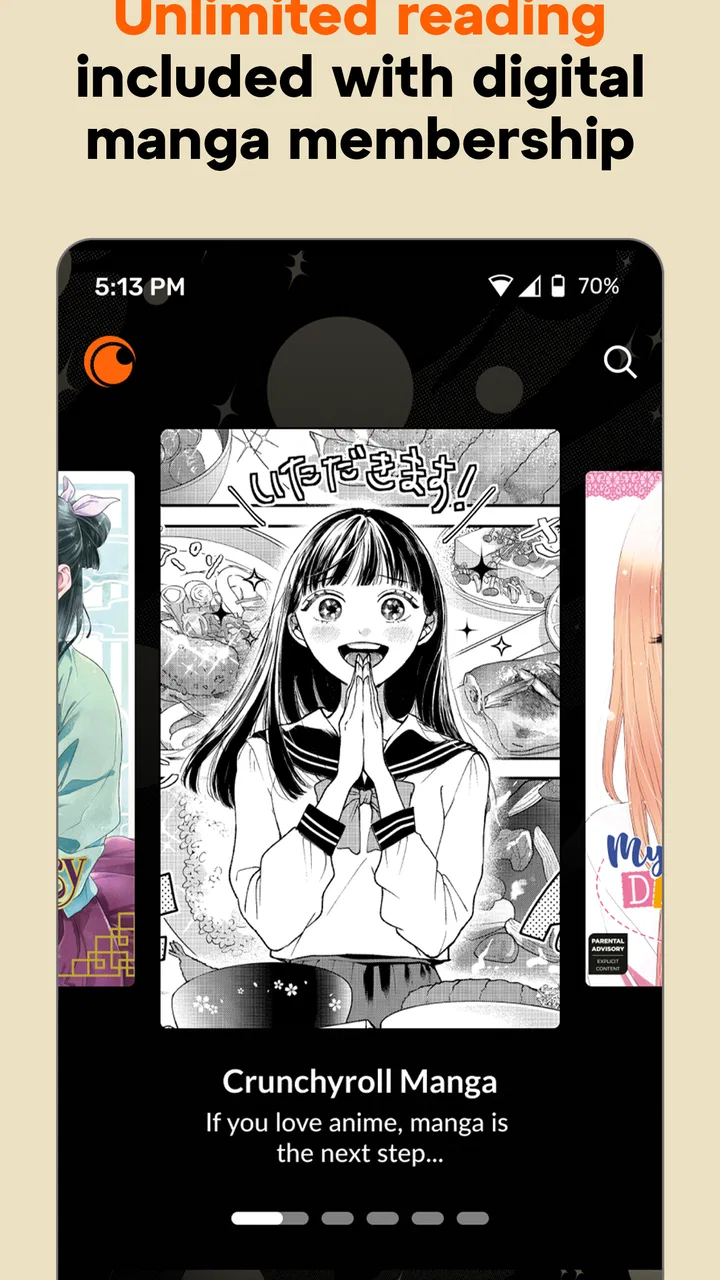
Crunchyroll Manga
- 4.6
- Rating
- 100.00K
- Installs
- Free
- Price

 Analysis by App-foxy
I approached Crunchyroll Manga as a focused reading app rather than another general entertainment service. Its central promise is simple: put manga reading, ad-free use, and offline access together in one place. That combination sounds straightforward, but it changes how useful the app feels in everyday life. The real question is not whether reading manga on a phone works; it is whether this particular setup makes reading easier than relying on browser tabs, scattered digital purchases, or a physical volume.
Crunchyroll, LLC developed this Comics app for readers who want a dedicated mobile space for their manga. It is free to install, carries a Mature 17+ age rating, and runs on Android 8.0 or later. The app reached version 1.4.1 when I reviewed it, and its early reception is encouraging: it holds a 4.6 average from around 2.7 thousand ratings, with more than 100 thousand installs. Those figures suggest a healthy starting audience, although they also indicate that this is still a relatively young reading service rather than a platform with the long-established familiarity of the biggest digital bookstores.
Offline reading is the feature that matters most
For me, the most meaningful capability is offline access. Ad-free reading is pleasant, but offline availability affects when and where I can actually use the app. A manga reader becomes much more practical when I can prepare reading before leaving home and continue without depending on a stable connection. That matters on a commute, during a flight, in a waiting room with unreliable reception, or simply in a part of the house where mobile data is weak.
You May Also Like

 Blood Strike: 2.5 Anniversary
Blood Strike’s Loadouts Turn Every Drop Into a Tactical Gamble
A close look at Blood Strike’s custom loadouts: how fast access to signature weapons reshapes its battle royale rhythm, rewards preparation, and narrows the gap between fights.

 Pandora - Music & Podcasts
Pandora’s Music Is Easy to Start, but Harder to Recover
Pandora’s strength is its low-effort path from a seed to a station. Its weak spot is how much confidence it asks you to place in connection, setup, and quiet recovery.

 8 Ball Pool
 Is Built on Rivalries, Rematches, and Routine
A close look at the rivalries, rematches, shared routines, and unanswered safety questions that turn a quick pool match into a persistent mobile community.

 Samsung Music
’s Quiet Strength Is Playing What You Already Own
Its reach comes less from spectacle than from dependable access to a personal library. That simplicity is both the app’s strongest retention engine and its ceiling.

 AccuWeather: Weather Radar
AccuWeather Review: A Quick, Clear Forecast for Everyday Decisions
For everyday plans, the best forecast is the one you can understand quickly. AccuWeather makes rain timing, radar, and local conditions easy to act on, with a few trade-offs.

 Hill Climb Racing
Why Hill Climb Racing Still Turns Crashes Into One More Run
A tiny car, a bumpy hill and one more upgrade: Hill Climb Racing keeps resurfacing because its simple chaos makes every near-miss feel personal.
More From Our News Desk



The important distinction is that offline reading turns the app from a connected storefront into a prepared reading shelf. I can think about what I want to read before the journey begins instead of discovering a chapter only after the network has already failed. That small change removes one of the most annoying interruptions in digital reading: reaching an interesting page and then waiting for artwork to load.
There is also a concentration benefit. A browser-based manga experience often brings along open tabs, account prompts, unrelated recommendations, and the temptation to switch to another site. A dedicated app gives the reading session a clearer boundary. Once the material is ready, the phone feels more like a compact comic reader and less like a miniature web browser. Offline access is not just a convenience here; it is what makes the service fit naturally into spare moments.
What the capability changes during a normal day
Imagine I am leaving for work with a few minutes to spare. Instead of hoping a chapter will load on the train, I prepare the reading beforehand while connected to Wi-Fi. On the journey, I can continue through pages without treating every tunnel or crowded station as a technical interruption. If I stop reading halfway through, the same device remains available when I return later. That workflow is much more dependable than keeping several browser pages open and trusting them to remain usable.
The same idea works for short breaks. Manga often suits fragmented reading because a reader can enjoy a chapter in one sitting or stop between scenes. Offline preparation means those small windows do not require a perfect signal. I found this especially useful when I wanted to read for only a few minutes rather than commit to a longer session at home.
There is a trade-off hidden inside that convenience: preparation becomes part of the routine. Offline reading is most useful when I remember to get content ready in advance. If I leave without doing that, the feature cannot magically turn unavailable material into accessible pages. The best habit is to plan the next reading session while connected, rather than treating offline mode as an emergency solution.
How I would organize reading around it
I would use the app in two stages. At home, I would choose the material for the next trip or break and make sure it is ready. Away from home, I would avoid unnecessary browsing and focus on reading what I prepared. This approach is more efficient than repeatedly opening the app to search, especially when I know I will be somewhere with poor reception.
That workflow also helps with battery and attention. Constantly loading pages, refreshing content, or moving between web pages can make a short reading session feel more cumbersome. A prepared session has fewer moving parts. I can open the reader, continue from where I stopped, and put the phone away again without turning a ten-minute break into a longer browsing session.
I would not describe this as a replacement for every manga-reading habit. Someone who enjoys discovering new titles spontaneously may prefer a connected catalog and broad browsing tools. Offline reading is strongest when I already know what I want to read and value dependable access more than constant exploration.
The reading experience in practice
The app’s identity is clearer than that of a general digital bookstore. It is built around comics, so the expected activity is obvious from the moment I open it: find manga, start reading, and return to it later. That focus is useful for readers who do not want novels, magazines, and unrelated media mixed into the same library experience.
Ad-free reading is the second part of the experience that I noticed. Ads can be especially disruptive in comics because a page is a visual composition. An interruption between panels or during a tense scene damages the rhythm more than it does in many text-heavy apps. Removing that distraction lets the artwork and panel sequence carry the experience without a separate visual demand competing for attention.
Still, ad-free access should be viewed alongside the app’s payment model. The application itself is free, while in-app purchases range from $13.99 to $179.99 per item. That is a wide span, so a reader should think carefully about what access or package suits their habits before spending. The free download makes it easy to try the reading environment, but the broader value depends on how much manga a person reads and how comfortable they are with the available purchase choices.
I would also pay attention to the age rating before recommending it to a younger reader. Mature 17+ is not a minor label to overlook, particularly if the device is shared with family members. The app belongs with an adult reader or someone old enough for that rating, and parents should not assume that a comics category automatically means child-friendly content.
Why it feels different from browser reading
Browser reading remains attractive because it is immediate. There is no separate app environment to learn, and a reader can move between sources quickly. That flexibility is useful when I am comparing titles or looking for something unfamiliar. The downside is that the experience can feel less settled: pages depend more visibly on the connection, and the surrounding browser environment is always close at hand.
A dedicated app has the opposite personality. It encourages a repeatable routine, which is valuable when I have a regular series or a daily reading habit. The focus is narrower, but that narrowness is a strength if I want to read rather than search. I would choose the browser for quick discovery and the app for planned sessions where continuity and fewer distractions matter more.
Why it feels different from physical volumes
Physical manga still wins for readers who care about paper, shelf display, lending books to friends, and owning a tangible object. Nothing on a phone reproduces the feel of turning printed pages or seeing a collection grow on a bookcase. Physical volumes also avoid battery and device concerns during reading.
The app wins on portability. A phone is already something most people carry, and a prepared digital library takes no additional shelf space. It is also easier to bring several reading choices on a trip without deciding which physical books deserve room in a bag. For me, the choice comes down to the purpose: physical books are better for collecting and tactile enjoyment, while this app is better for flexible access in small pockets of time.
The best scenario for Crunchyroll Manga
The strongest use case is a regular commuter or traveler who already knows which manga they want to read. Consider a reader who leaves home early, spends part of the day moving between places, and has several short breaks rather than one long period for entertainment. Preparing reading in advance makes those gaps useful. The reader can begin at home, continue during transit, and pick up the story later without rebuilding the session each time.
This is more than a travel feature. Students, shift workers, and people who spend time in buildings with inconsistent reception can benefit from the same routine. The app is particularly appealing when reading time is unpredictable. If a meeting ends early or a queue moves slowly, a phone with prepared manga becomes an easy way to use those unexpected minutes.
I can also see value for readers who want to avoid carrying multiple books. A physical collection has charm, but it becomes inconvenient when someone is deciding between several series for one journey. Digital access reduces that packing decision. The compromise is that the reading experience remains tied to the phone, so screen size and comfort still matter. A larger device may be preferable for detailed artwork, while a smaller phone is more convenient to carry.
Another realistic scenario is a reader who wants a calmer evening routine. Instead of opening a browser and drifting through unrelated content, I can choose a chapter, read without ad interruptions, and stop when I reach a natural break. That makes the app useful not because it offers endless stimulation, but because it can create a more deliberate boundary around manga time.
The trade-offs I would consider before installing
The first limitation is the dependence on preparation for offline use. If I regularly forget to prepare content, the headline capability will not help much. The app is best for planned reading, not for someone who wants to browse randomly in places where connectivity is uncertain.
The second is the cost structure. The free installation lowers the barrier to trying the app, but in-app purchases can become substantial, with individual items priced anywhere from $13.99 to $179.99. I would set a personal spending limit and decide whether I want occasional reading or a larger commitment. The right choice depends on reading volume, not simply on the fact that the app can be installed without an upfront charge.
The third trade-off is platform dependence. A phone is convenient, but it is also a relatively small screen for artwork with dense panel layouts. Readers who are sensitive to eye strain or who prefer large pages may find a tablet or physical book more comfortable. I would not choose this app solely because it is portable if my main reading sessions happen at home and I already prefer a larger format.
There is also the question of discovery. A focused manga app can feel cleaner than a general store, but a reader who wants to compare many unrelated digital formats may prefer an established ebook marketplace. Those alternatives often make sense for people who want manga alongside novels or other publications. Crunchyroll Manga is more convincing when comics are the main reason for opening the app.
Finally, the Mature 17+ rating narrows its audience. I would not recommend it as a family tablet app without checking who will use the device. The rating should shape the installation decision from the beginning, not be treated as a detail to investigate after a younger reader has access.
Small habits that make the feature more useful
Prepare reading before leaving a reliable connection instead of waiting until the journey has started.
Choose a realistic amount for the next session so the phone remains organized and the reader is not sorting through too many options offline.
Use the app for planned reading and keep browser browsing separate when the goal is discovery rather than uninterrupted chapters.
Consider screen comfort first: portability is valuable, but detailed comic art deserves a display that feels comfortable for the length of a session.
These habits reveal the app’s real character. It is not trying to solve every possible manga need at once. Its strongest contribution is reducing friction between deciding to read and actually reading, especially when the internet is unreliable or distractions are unwelcome.
Who gains the most from this focused reader
I would recommend it most strongly to an adult manga reader who values convenience, dislikes advertising during visual storytelling, and often reads away from a dependable connection. That person is likely to appreciate the combination of a dedicated comics environment and offline preparation more than someone who only reads occasionally.
It is also a good fit for people who want to replace a messy collection of browser tabs with a more intentional routine. The app’s free entry point makes it reasonable to test whether that routine suits you before making a larger purchase. I would spend time evaluating how often I read, where I read, and whether my phone screen is comfortable before committing to higher-priced in-app options.
I would be more cautious about recommending it to a collector who values physical ownership, a reader who prefers large displays, or someone who wants one universal ebook library for manga and many other types of books. Those readers may find physical volumes, a tablet-centered setup, or a broader digital bookstore better aligned with their priorities.
I would also skip it for a child or younger teen because of the Mature 17+ rating. That is not a criticism of the app; it is simply an important boundary around who should use it. The same applies to anyone expecting every comics app to be suitable for shared family access.
My overall recommendation
Crunchyroll Manga makes the most sense when offline reading is the feature you will genuinely use. Its ad-free, dedicated approach can turn a phone into a dependable manga companion for commutes, travel, and short breaks. In my experience, that is a more meaningful benefit than a long list of secondary conveniences because it changes the circumstances in which reading is possible.
The app is not automatically the best choice for every manga fan. The purchase range deserves careful thought, phone-sized reading is not ideal for everyone, and spontaneous browsing may be better served by a browser or a broader marketplace. But for an adult reader who wants prepared, uninterrupted access and does not mind building a digital reading habit, this is a focused option worth trying before deciding how deeply to invest.
My final view is favorable but specific: install it if your reading life includes unreliable connections, limited luggage space, or frequent short pauses. If your priority is collecting paper books, reading on a large screen, or keeping every kind of digital publication together, choose another format instead. For the right reader, the combination of offline access and an ad-free manga session is practical enough to become part of the daily routine.
FAQs for Crunchyroll Manga
01What is Crunchyroll Manga, and what can I read on it?
Crunchyroll Manga is a digital reading service focused on Japanese manga, offering access to selected series through the Crunchyroll ecosystem. Its catalog can include popular titles, simulpub chapters released close to their Japanese publication, and back issues, although availability varies by country and licensing agreements. Before downloading, check the current catalog in your region because not every series or chapter is available everywhere.
02Do I need a Crunchyroll subscription to read manga?
Access requirements depend on the title, chapter, and your region. Some content may be available through a Crunchyroll membership, while other chapters can require a separate purchase or may not be accessible in every market. You generally need a Crunchyroll account to manage access and synchronize your library. Review the latest subscription terms inside the app before paying, since plans and manga benefits can change.
03Does Crunchyroll Manga work offline?
Offline reading availability can vary according to the app version, title, and the rights provided by the publisher. If a download option is offered, you normally need to save chapters while connected to the internet and open them through the app rather than a separate reader. Downloads may expire or disappear if your membership changes, so do not assume that every chapter can be permanently stored offline.
04Is Crunchyroll Manga available on both Android and iPhone?
Crunchyroll’s mobile services are generally designed for Android and iOS devices, but the exact manga experience may differ depending on your operating system, country, and current app support. Install the official application from Google Play or the Apple App Store, keep your device updated, and sign in with the correct Crunchyroll account. Older phones may also have limitations related to performance, storage, or operating-system compatibility.
05Are all manga chapters uncensored and available in English?
No, you should not expect every series, chapter, or edition to be available in English or in the same form as a printed release. Translation, localization, age ratings, censorship, and release timing depend on publisher permissions and regional licensing. Some titles may launch later in certain countries, while others may be unavailable entirely. Check the individual series information before subscribing or making an in-app purchase.
Pros
- Official manga releases from trusted publishers and creators.
- Clean reading interface with smooth page navigation.
- New chapters can appear shortly after their Japanese release.
- Bookmarks make it easy to return to unfinished series.
- Available on both Android and iOS devices.
Cons
- The manga catalog varies by country due to licensing restrictions.
- Many popular titles require a paid Crunchyroll membership.
- Some series may have chapters missing from the digital edition.
- Offline reading availability can depend on the subscription tier.
- The app may feel limited if you only follow a few licensed titles.

Crunchyroll Manga
Gallery